




Phytotherapy in Cancer Treatment: A Supportive and Preventive Approach
What is Phytotherapy?
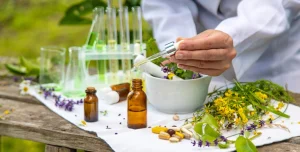
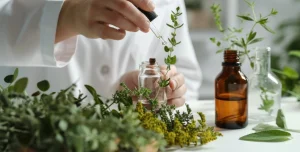
Phytotherapy literally means “treatment with plants” and refers to a branch of medicine that aims to treat pathological (disease-causing) conditions in living organisms using natural substances derived from plants. Its application dates back thousands of years, especially in regions such as the Far East, Central Asia, and Mesopotamia.
While herbal teas, tinctures, and ointments prepared by our ancestors represent the folk medicine aspect of this tradition, today phytotherapy has become a modern medical approach supported by scientific research and applied with controlled ingredients.
Where Does Phytotherapy Stand Today?
Today, phytotherapy is not limited to simple health problems; it is used as a complementary and supportive treatment in a wide range of conditions from psychiatric disorders to autoimmune diseases, skin lesions to chronic illnesses. One of its most notable application areas is undoubtedly cancer treatment.
Considerations in the Application of Phytotherapy
Although phytotherapy is perceived as harmless due to its natural origin, it is still a medical intervention. Therefore, every application in this field must:
-
Be conducted under the supervision of a qualified physician
-
Use extracts supported by scientific preclinical studies (in vitro, in vivo)
-
Be planned individually and protocol-based, not arbitrarily
The active compounds obtained from plant parts (flowers, roots, leaves, bark, etc.) can have significant pharmacological effects in high concentrations. Thus, the assumption that “natural always means safe” can lead to dangerous consequences.
Is Phytotherapy the Treatment Model of the Future?
Modern medicine, particularly in oncology, adopts a multi-modal treatment model. In this model, conventional treatments such as surgery, chemotherapy, and radiotherapy are supported by complementary approaches like phytotherapy.
Phytotherapy’s effect on cancer is not aimed directly at destroying tumor cells, but rather at strengthening the immune system, reducing side effects, and improving quality of life. In this sense, it serves as a complementary therapy—and in some cases, an alternative option on its own.
When Is Phytotherapy Used in Cancer Treatment?
Phytotherapy can be applied in various stages of cancer treatment and for different purposes:
1. As Support During Chemotherapy
Phytotherapy may improve treatment efficacy by helping coordinate cellular responses during chemotherapy. Some herbal agents can enhance the effects of chemotherapy drugs while protecting healthy cells from damage.
2. To Reduce Side Effects of Chemotherapy
Phytotherapeutic agents may be effective in alleviating common side effects caused by chemotherapy, such as nausea, loss of appetite, immune suppression, hair loss, and fatigue.
3. In Combination with Radiotherapy
When used alongside radiotherapy, it may support cellular repair and limit damage to surrounding healthy tissues.
4. Preventive Use in High-Risk Individuals
In people with genetic predisposition or living in high-risk environments, immune-supporting and antioxidant phytotherapeutic agents can be used in preventive programs.
5. Supportive Care in Terminal Stage
In advanced (terminal) stages of cancer, where conventional treatments are no longer effective, phytotherapy can play an important role in symptom control and maintaining quality of life.
6. Preventive Use in Healthy Individuals
Phytotherapy can be used prophylactically to reduce cancer risk, slow cellular aging, and maintain immune balance in healthy individuals.
A Holistic Approach is Possible
Cancer is not merely a cellular disease—it is a complex process shaped by lifestyle, immune balance, and environmental factors. Therefore, treatment should not rely on a single method but rather adopt holistic strategies.
Phytotherapy can be a reliable and effective component of such a holistic approach. However, it must always be applied based on scientific evidence, personalized protocols, and under medical supervision.