


Can Cancer Be Treated? A Phytotherapeutic Perspective
A Personal Beginning: Why Phytotherapy?
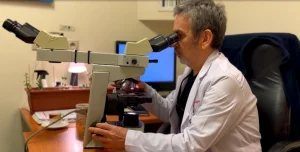
Before answering this question directly, I would like to share why I became interested in phytotherapy and how my emotional connection with this field began. I am a pathologist—a physician who diagnoses serious diseases, especially cancer, through microscopic and cellular evaluation. In the medical world, we are doctors who focus on diagnosis rather than direct treatment.
Whenever I introduce myself—like many of my colleagues—the following questions inevitably arise:
“What kind of doctor are you?”
“What is your specialty?”
Because pathology is not widely known by the public, I often describe it by saying, “I’m the doctor who diagnoses cancer.” But right after that, another common question is almost always asked:
“Doctor, haven’t they found a cure for cancer yet?”
“Why is there still no definitive treatment for this disease?”
While these questions may seem more relevant to oncologists, they are deeply thought-provoking for those of us working in diagnostic fields like pathology. Over time, these questions become less about others asking us—and more about us asking ourselves.
Scientific Advancements and What’s Still Missing
Despite the incredible leaps in 21st-century medicine—artificial intelligence, genetic engineering, and personalized medicine—why have we still not found a consistently effective and permanent cure for every type of cancer?
What are we missing?
Are current methods, protocols, and information truly sufficient?
These questions marked a turning point in both my personal and professional journey.
A Breaking Point: Loss and Awakening
In 2012, my sister was diagnosed with pancreatic cancer. At the time, the tumor was only 1 cm and localized in the tail of the pancreas. Although the diagnosis was made early, and despite extensive surgical and chemotherapy interventions, she survived only two years. The last six months of her life were spent walking the fine line between life and death.
During that period, I encountered a promising phytotherapeutic extract—albeit too late. I noticed some improvement in her lab values, but unfortunately, we were already out of time.
It was at that moment that my interest in phytotherapy turned into a passion. The potential of plant-based support therapies as a complement to conventional treatment pushed me to dig deeper. Over the years, this interest evolved into a professional commitment.
Phytotherapy and Cancer: Not an Alternative, but a Complementary Reality
Today, when I’m asked “Can cancer be treated?” my answer is clear:
Yes, it can.
But that answer is no longer based solely on conventional methods—phytotherapy is now part of it.
Phytotherapy, or plant-based treatment, is a time-honored medical tradition rooted in natural pharmacology. When supported by modern science and applied under medical supervision, it becomes a valuable complementary model in the battle against complex diseases like cancer.
Its role is not to directly kill cancer cells, but to:
-
Strengthen the immune system on a cellular level,
-
Support DNA repair mechanisms,
-
Reduce inflammation and oxidative stress,
-
Improve overall quality of life.
Inspired by İsmet İnönü’s Words
The respected Turkish statesman İsmet İnönü once compared veterinary medicine to human medicine by saying,
“Veterinary science is like an inland sea within the ocean of medicine.”
Today, I believe we can say something similar:
Phytotherapy is the expanding realm within the ocean of modern medicine—guiding the course of future treatments.
Conclusion: Hope and Science Go Hand in Hand
Cancer treatment is no longer limited to surgery, chemotherapy, or radiation alone. These remain essential, but we now understand that science-based complementary therapies like phytotherapy can complete the missing puzzle piece in cancer care.
For the right patient, with the right diagnosis, at the right time, plant-based treatments may offer renewed hope—or even a second chance at life.
And yes, I’ll say it again:
Cancer can be treated. Because now, we also have phytotherapy.